LANDLORDS ARE DISPROPORTIONATELY INRICHED BY THE FINACIAL EXPLOITATION OF THE RENTER.
The renter vs. the profiters
The number of U.S households renting is large.
- A large portion of U.S. rental properties are owned by individual “mom-and-pop” landlords (private individuals owning small numbers of units). For example, one data source finds that “Private individuals or ‘landlords’ own 68.7% of U.S. residential rental properties.” iPropertyManagement.com
- In the small-multifamily rental sector (5-49 units), individual and small-scale owners predominate; these properties make up about 17% of the nation’s rental stock (≈ 8.2 million units) in that category. Terner Center
- For the single-family rental market (houses rented out rather than apartments), studies estimate that individual investors (not large institutions) own about 70.2% of rental units (per one report) in one classification. FAS Project on Government Secrecy
- The number of U.S. households renting is large: e.g., in 2019 about 36% of households rented. Pew Research Center
- Landlords’ business behaviors have been studied: e.g., a post-COVID survey of over 2,500 rental property owners found significant rent-collection disruptions in 2020. PMC
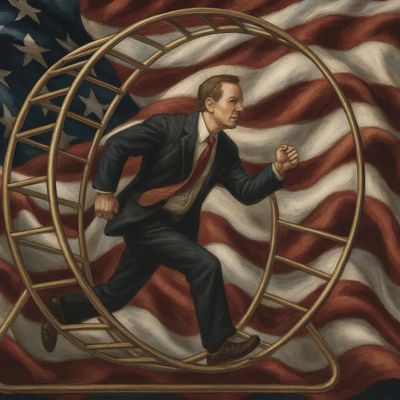
The financial wheel
Today, our society is marked by an epidemic of profiters, and major realastate investors, skyrocketing cost of living, and government policies that prioritize profits over the people. This system undermines social trust, creates homelessness, and perpetuates inequality. It's not healthy; it's exploitative. The existence of a permanent renter class is a sign of societal failure, not progress. Without access to affordable, purchasable housing millions are on a financial treadmill, trapped in a cycle of dependency.
A system of financial servitude
For too long this dynamic has fostered economic inequality, social instability, and financial dependence. Renters who make up a significate portion of the population, have been systemically denied the opportunity to own homes due to restrictive zoning laws, exploitive rent increases, and government policies that prioritize profit over the people. THE RENTERS REVOLUTION seeks to dismantle this broken system and replace it with a fair, sustainable, and inclusive housing model where home ownership is accessible to all economic groups.
Systemic injustice
Capital over citizens.
- “Profit before people is not governance — it’s betrayal.”
- “When profit rules, people lose.”
- “A nation that values capital over citizens is not a democracy.”
- “Government for sale — citizens sold short.”
- “When greed governs, humanity suffers.”
The epidemic is not simply an economic trend-it is a systemic injustice. Renters have been disenfranchised by government policies that allow housing to be treated as a commodity rather than as a human right. The rise of profit investors represents the financial destruction of the lower economic third of society.
For renters, the rise of landlords over the years, has meant higher rents, greater financial instability, and diminished chances of ever owning a home. Long-term renters loose at the chance of accumulated equity, they retire without dignity, and the opportunity to pass resources down to their children. The wealth gap between owners and renters is now chasm, perpetuated by the epidemic of landlords.
The number of landlords has exploded over the last decade. This growth is not a natural evolution, but the product of deliberate policies: restrictive zoning, inflated permit fees, and financial incentives that favor profits. As landlords multiply, renters becme a permanent class, stripped of opportunities for wealth accumulation through homeownership.